MY APPROACH
I work in a way that starts with your lived experience: what you’re feeling, what you’re going through, and what matters to you. I’m interested in you as a whole person, not a list of symptoms. I’m also guided by a transpersonal perspective, when that feels helpful.
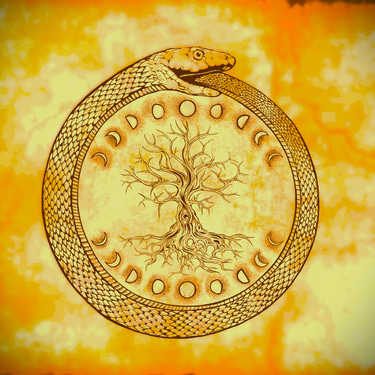
I believe many of us are moving, often quietly, towards a life that feels more integrated, true, and meaningful. At the heart of my work is something I call the Self: a living centre within you. You might experience it as your deeper wisdom, or the part of you that can see clearly and care deeply.
This inner centre can look and feel different for each person, shaped by life and experience. There is no “right” way to find it. We simply notice what is already there, and gently strengthen your connection with it.
If spiritual or transpersonal ideas are meaningful to you, we can include them. If you’d rather keep things purely psychological, that is completely welcome too. We work in a way that fits you.
Symptoms as communication
I don’t see symptoms as “just problems to get rid of”. Often, they are signals, ways your system is trying to cope, protect you, or express something that hasn’t had space or words yet. At times, the distress carried in a symptom may also have a prospective value: not only signalling what is painful or unresolved, but pointing toward what in the psyche is trying to develop, reorganise, or come into fuller expression.
In this sense, symptoms are not merely meaningless disturbances, but may hold an evolutionary direction or potential within psychological life.
Alongside support for relief and stability, we explore what your symptoms might be holding: what they may be asking for, and what you may have learned to do in order to survive grief, anger, fear, or overwhelm.
We make sense of things together, step by step forming a shared understanding of what might be contributing, what keeps the pattern going, and what could help it shift.
Grounding and safety first
Deeper work needs a safe foundation. Especially at the beginning, we focus on grounding and stabilisation. I work with a trauma-informed and mind–body (psychosomatic) lens, supporting your nervous system as well as your thoughts and feelings.
We build practical resources that help you stay present, feel steadier, and have more choice in how you respond, particularly when life gets difficult.
We also work with inner conflict in a way that doesn’t overwhelm you, so that any goals we set are guided by what feels true and aligned for you: not by fear, pressure, or old survival strategies.
Methods and integration
I draw on different approaches, chosen collaboratively depending on what you need and what feels right. This may include working with inner parts, inner-child themes, shadow work, dreams, conscious and unconscious patterns, and psychodynamic hypnotherapy.
If we use any regressive or “looking back” elements, they are done gently and with care focused on healing and meaning in the present, not on trying to prove what happened in the past.
Issues I work with
I often support people with low mood; anxiety and depressive symptoms; self-acceptance struggles; difficult life situations; loss of meaning; stress-related symptoms; identity and relationship difficulties; coping patterns that no longer serve; and personal growth, including shadow integration and self-awareness.
Over time, progress often looks like a stronger relationship between your everyday “I” and your deeper sense of Self: so you can meet life with more choice, more steadiness, and a way of being that feels more like you.
Hypnotherapy: a gentle space for change
When it feels appropriate, and when there is enough steadiness and support, our work may include hypnotherapy. I approach this as a gradual, carefully paced process using focused attention and guided imagery. It can help soften fear-based patterns and limiting self-stories, so that something more grounded and true can begin to take shape.
I understand hypnosis as a natural state of absorbed attention, often accompanied by deep relaxation. In this state, it can be easier to notice automatic reactions with gentleness and clarity, rather than getting pulled along by them.
Sometimes the mind tries to solve things through effort, control, or determination. That can be understandable—but it can also create more inner resistance, especially when a pattern is protective or rooted in fear and earlier experience.
A light trance offers another way. It invites the symbolic mind—imagery, metaphor, sensation, and meaning—to help reorganise experience from the inside out, in a way that feels more aligned with your deeper Self.
Hypnotherapy is not sleep, and it is not mind control. You remain aware and in charge throughout. We work collaboratively, always with your consent. If anything feels too intense, we slow down, return to grounding, and prioritise safety.
Depending on what you need, our work may include:
Stabilisation and grounding: strengthening inner resources to support regulation, resilience, and a steadier sense of safety.
Guided imagery and parts work: meeting inner parts and inner figures in ways that support coherence and integration.
Inner-child work: gentle imagery to reconnect with feelings and needs in the present—without aiming to recover hidden memories or establish “facts” about the past.
Dreamwork, shadow, and Self-connection: working with dreams and disowned aspects of the psyche, while strengthening your inner observer so patterns can be recognised without overwhelm and met with greater choice.
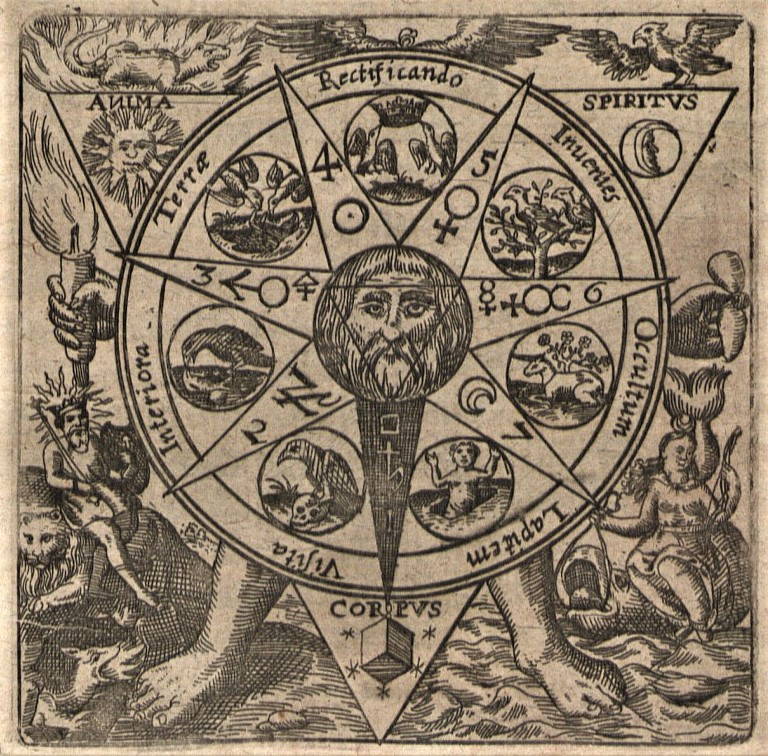
A metaphor I find helpful is this: therapy does not force growth. It helps create the conditions for it. The instructions are already in the seed. In the same way, the potential for change is already within you, held in your deeper Self.

